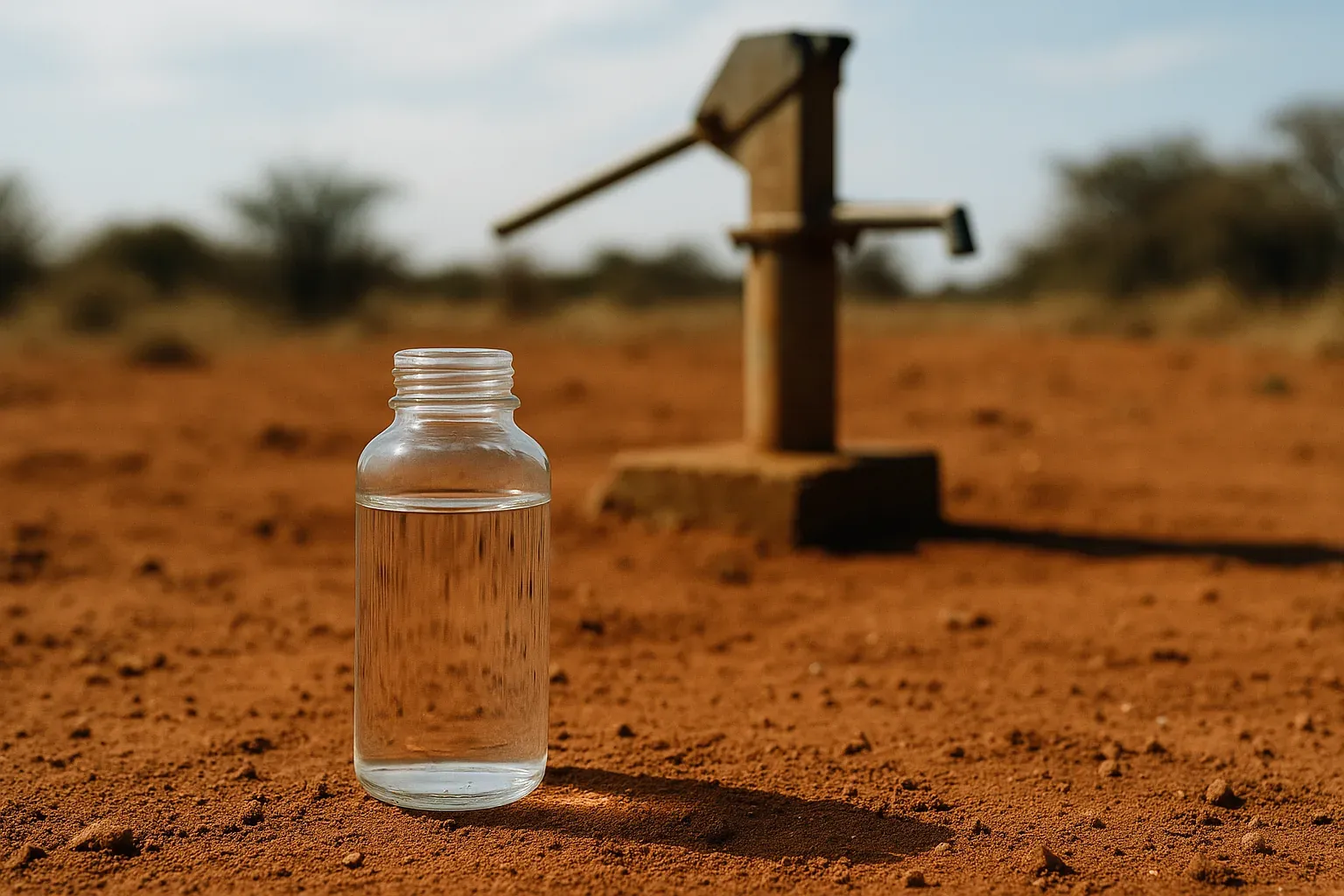
Borehole water comes straight from the ground, so testing it before you drink it is genuinely worth doing, not a box-ticking exercise. Here's why it matters, and the real, practical way to test it properly.
Why Test Borehole Water?
Groundwater picks up whatever is naturally present in the soil and rock it moves through — that can mean minerals, sediment, or microorganisms, depending on your area's geology. None of this is visible or reliably detectable by taste, which is exactly why a lab test matters more than a "it looks fine to me" judgement call. Testing doesn't mean your borehole has a problem; it means you actually know what you're working with before you drink it.
How to Test Borehole Water
The process itself is straightforward:
- Use a sterilised container — rinsed with boiling water beforehand — to take a sample of about 1 litre from your borehole or well-point.
- Send the sample to a SANAS-accredited lab for analysis.
- Get the sample to the lab within 24 hours of taking it. The longer it sits before testing, the less accurate the results.
It's a simple process, and skipping it is the one step people are most likely to leave out when they're eager to just start using a new borehole.
What Does a Water Test Actually Check For?
Generally, a water test looks at things like bacteria and other microorganisms, overall mineral content, and general water chemistry such as pH. Exactly what's included can vary between labs — some offer a basic safety-focused panel, others test a much wider range — so it's worth asking directly what a specific lab covers before you send a sample, rather than assuming every test checks for the same things.
What If the Test Comes Back with a Problem?
Don't panic if it does. In most cases, an issue flagged by a water test is addressable through filtration or treatment — it's not automatically a sign the borehole itself has failed. Depending on what's found, the fix might be as straightforward as adding a filter for sediment or a treatment step for a specific mineral. What matters is knowing what you're dealing with, rather than guessing.
When Should You Test?
At minimum, before you rely on a new borehole for drinking water for the first time. Beyond that, it's sensible to test again if anything changes — taste, colour, smell — or simply as part of your regular borehole maintenance routine.
Need a driller who takes water testing seriously, not just an afterthought? Get quotes from local drillers who include proper water testing as part of the job.